


TL;DR: Emergency room bills document the initial crisis, but treatment plans define the injury’s full scope and future impact. At trial, juries rely on detailed medical narratives, diagnostic evidence, and expert testimony to assign value; elements rarely captured in a single ER visit. Cases built on long-term treatment documentation consistently outperform those anchored only in emergency care.
The ambulance doors close. The ER staff stabilizes the injury. A few hours later, there’s a discharge summary and a bill that looks like a down payment on a house. That bill feels like proof, concrete, immediate, undeniable. But when the case reaches trial, the ER invoice alone tells only the beginning of the story. Juries need to see the chapters that follow: the diagnostic imaging that reveals hidden damage, the specialists who map recovery timelines, the therapy notes that chronicle pain and progress. Emergency care captures the moment of crisis. Treatment plans capture the cost of survival after it.
Medical evidence serves two functions in personal injury litigation. It establishes causation, proving the defendant’s conduct caused the harm, and it quantifies damages, translating injury into economic and noneconomic loss. Emergency room records fulfill the first function with clarity. They timestamp the injury, document objective findings like fractures or lacerations, and create an unbroken chain between the incident and the harm. But causation without valuation leaves half the case untold.
Why Emergency Room Bills Fall Short at Trial
 Emergency departments operate under a different mandate than treating physicians. Their mission is stabilization, not rehabilitation. An ER visit produces a snapshot: vital signs, imaging ordered to rule out life-threatening conditions, pain medications dispensed, discharge instructions advising follow-up care. The bill reflects that narrow window, often driven by facility fees and diagnostic tests performed under time pressure rather than deliberate, long-range clinical reasoning.
Juries understand emergency care as reactive. The ER responds to what the injury demands in that moment, not what it will demand over months or years. A lumbar strain diagnosed in the ER may generate a bill for several thousand dollars. But that figure reflects the cost of ruling out a spinal fracture, not the cost of treating chronic pain, lost range of motion, or diminished earning capacity. When defense counsel cross-examines the plaintiff about “full recovery” because the ER discharged them in stable condition, the absence of a documented treatment plan becomes a liability.
Emergency records also lack the continuity that establishes permanence. A single visit cannot demonstrate whether symptoms resolved, worsened, or plateaued. It cannot tie ongoing limitations to the original trauma. Juries tasked with awarding damages for personal injury need a medical narrative that extends beyond the initial crisis and into the plaintiff’s daily reality.
How Treatment Plans Build Persuasive Medical Narratives
A treatment plan transforms isolated medical events into a coherent timeline. It begins where the ER discharge ends: with follow-up appointments, specialist referrals, and a diagnostic process designed to identify injuries that emerge over days or weeks. Soft tissue damage, traumatic brain injury symptoms, and psychological trauma often evade detection in the emergency setting. Treatment plans capture these delayed manifestations through serial examinations, patient-reported outcomes, and objective testing.
The persuasive power of a treatment plan lies in its documentation of medical necessity. Each visit generates a provider note explaining why the intervention was ordered, how the patient responded, and what functional deficits persist. Physical therapy records track progress toward measurable goals, or the lack of it. Pain management notes justify epidural injections or prescription adjustments based on symptom severity. Surgical consultations explain why conservative care failed and invasive procedures became necessary.
Consider a hypothetical illustration: a motorcyclist suffers a shoulder injury in a collision. The ER takes X-rays, diagnoses a contusion, prescribes anti-inflammatories, and discharges the patient with instructions to see an orthopedist if pain persists. Three weeks later, an MRI ordered by the orthopedist reveals a rotator cuff tear requiring surgical repair. Physical therapy follows for six months. The treatment plan documents the full course of visits, limited overhead mobility at maximum medical improvement, and a permanent impairment rating assigned by the treating physician. At trial, a jury evaluating that record weighs the surgical intervention, the therapy regimen, and the functional loss, not the initial ER bill alone. Every case is different, and outcomes depend on the specific facts and evidence.
Treatment plans also support claims for future medical expenses. Expert testimony projecting the need for repeat surgeries, ongoing pain management, or assistive devices requires a foundation of documented care. An ER bill standing alone cannot establish that foundation. The progression from acute injury to chronic condition must appear in the medical record, visit by visit.
Evidentiary Weight: What Juries Actually See
When medical records enter evidence, the jury does not evaluate them in isolation. Jurors compare the plaintiff’s testimony about pain, limitations, and life disruption against the clinical picture painted by healthcare providers. Gaps between the two create credibility problems. If the plaintiff describes debilitating back pain but the medical record shows only a single ER visit and no follow-up care, the jury may infer exaggeration or attribute the complaints to pre-existing conditions unrelated to the accident.
A detailed treatment plan corroborates the plaintiff’s lived experience. Therapy notes describing difficulty with overhead reaching align with testimony about needing help putting groceries away. Pain diagrams completed at each visit show consistent complaint patterns. Prescription records reflect escalating or tapering analgesic needs. This convergence of subjective reports and objective documentation builds a case that withstands cross-examination.
Florida’s rules for apportioning fault deserve careful attention, especially after a significant change in the law. For negligence causes of action accruing on or after March 24, 2023, a modified comparative negligence framework under Florida Statutes § 768.81 applies, and a plaintiff found more than 50 percent at fault is barred from recovering damages. For causes of action accruing before that date, Florida’s previous “pure” comparative negligence rule generally governs, reducing the award in proportion to the plaintiff’s share of fault. Under either framework, when the defense argues the plaintiff failed to mitigate damages by refusing recommended treatment, the presence or absence of a documented treatment plan carries substantial weight. A plaintiff who followed every referral, completed every therapy session, and exhausted conservative options before opting for surgery demonstrates reasonable mitigation. A plaintiff who stopped treatment prematurely or ignored medical advice hands the defense a reduction argument. For more on how fault percentages shape recovery, see Comparative Negligence: How Fault Percentage Affects Payout.
Strategic Use of Expert Testimony to Connect Bills and Plans
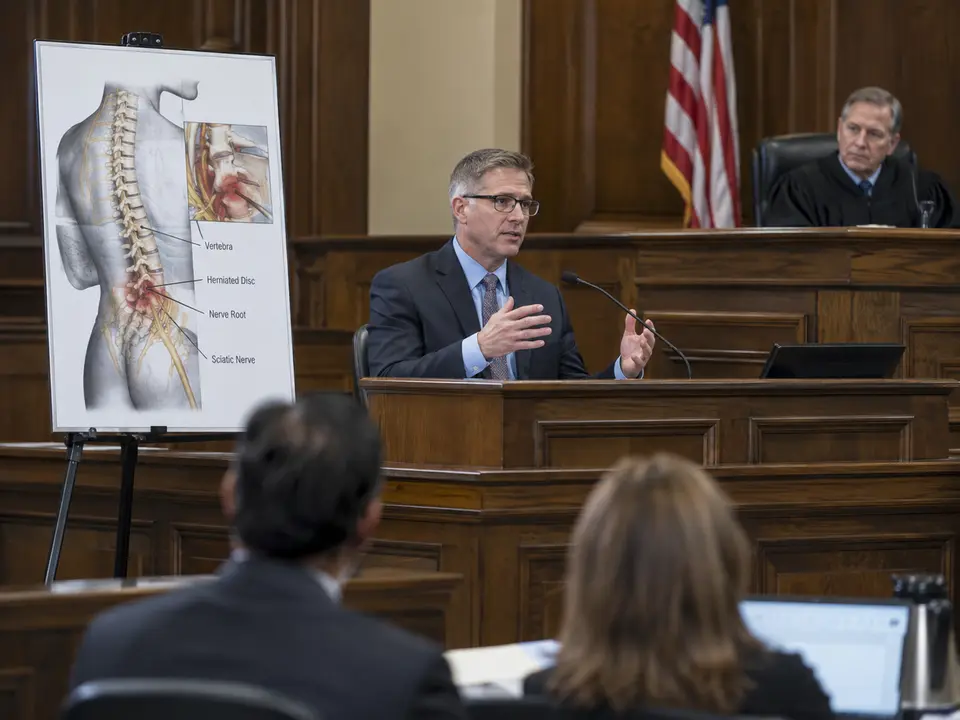
Medical billing records and treatment notes do not interpret themselves. Juries need testimony from a qualified medical witness to explain why certain interventions were necessary, how they relate to the defendant’s conduct, and what future care the injury demands. Emergency room physicians rarely serve this role. Their involvement ends at discharge. Treating physicians, orthopedic surgeons, neurologists, and physical medicine specialists carry the narrative forward.
An effective expert synthesizes the ER records and the treatment plan into a single causal story. The expert explains how the mechanism of injury observed in the ER, say, a hyperextension force from a rear-end collision, produces the soft tissue tears, disc herniations, or nerve impingements documented in subsequent imaging. The expert walks the jury through the treatment timeline, explaining each escalation from conservative care to surgical intervention. The expert opines on permanence, using clinical findings and standardized assessments to support a prognosis.
Defense experts will challenge every element of this narrative. They will argue the ER records show minimal trauma. They will claim the treatment plan reflects excessive billing or medically unnecessary procedures. They will suggest pre-existing degenerative changes, not the accident, caused the plaintiff’s current condition. The strength of the plaintiff’s rebuttal depends on the depth and consistency of the treatment record. Sparse documentation invites skepticism. Comprehensive longitudinal care answers it.
Common Pitfalls That Undermine Treatment-Based Damages Claims
Not all treatment plans strengthen a case. Inconsistencies, gaps, and excessive treatment can erode credibility. Several patterns tend to trigger heightened defense scrutiny:
- Delayed initial follow-up. Waiting weeks or months after the ER visit to see a specialist allows the defense to argue the injury was not serious enough to warrant prompt attention.
- Provider shopping. Seeing multiple specialists in the same discipline without documented referrals or worsening symptoms invites the argument that the plaintiff was searching for an opinion that supports litigation.
- Non-compliance with prescribed care. Missing physical therapy appointments or declining recommended surgery gives the defense room to question whether the injury caused significant disruption.
- Treatment at high-volume accident clinics. Providers who advertise exclusively to accident victims or who bill exclusively on a lien basis often face credibility challenges, regardless of the quality of care.
- Lack of objective findings. Treatment plans based solely on subjective complaints, without diagnostic imaging, functional assessments, or standardized testing, invite arguments that the symptoms are overstated.
Each of these issues can often be addressed if identified early. Counsel can explain delays, justify specialist changes, or supplement the record with additional evaluations. But once the case reaches trial, the treatment record stands as written. Repairing a flawed record through testimony alone is difficult.
Balancing Emergency and Longitudinal Evidence for Maximum Recovery
The question is not whether ER bills or treatment plans matter more. Both serve essential functions. Emergency records anchor the injury in time and causation. Treatment plans extend that anchor into a full accounting of harm. The strongest personal injury cases integrate both, using the ER visit as the foundation and the treatment plan as the superstructure.
Strategic litigation planning begins at the ER discharge. The instructions to follow up with a specialist are not administrative formalities; they are the first step in building a treatment narrative. Securing those referrals, attending the appointments, and ensuring every provider documents findings in detail converts medical care into trial-ready evidence. Every gap in that chain is a vulnerability the defense will look to exploit.
When settlement negotiations stall or liability disputes prevent early resolution, the quality of the medical record often determines whether the case can withstand the scrutiny of trial. Juries do not award damages based on sympathy or outrage. They award damages based on proof. Treatment plans provide that proof in a form juries understand: a documented progression from injury through care to lasting impact. Emergency room bills start the clock. Treatment plans carry it forward.
Closing Remarks
You have been through the emergency room, and now the paperwork, the phone calls, and the doubt are piling up. If follow-up care revealed how serious the injury really is, if gaps in treatment are being used to minimize your claim, or if the defense insists the ER bill reflects the whole of your loss, you do not have to sort that out alone. CDB Injury Law represents injured people across Florida, building evidence-driven narratives that connect emergency care to long-term impact. Let us talk about your recovery and the medical documentation that supports it.
Frequently Asked Questions
Can a case go to trial based only on emergency room records?
A case can proceed to trial with only ER records, but the damages recoverable will likely be limited to the immediate care documented in those records. Without follow-up treatment, there is little evidentiary basis for claiming ongoing pain, permanent impairment, or future medical expenses. Juries assess damages based on what the medical evidence supports, and a single ER visit rarely tells the full story of an injury’s impact.
What happens if the plaintiff stopped treatment before reaching maximum medical improvement?
Premature termination of treatment invites a failure-to-mitigate-damages defense. The defendant will argue that any ongoing symptoms or limitations result from the plaintiff’s decision to abandon care, not from the original injury. If there were legitimate reasons for stopping treatment, financial hardship, exhausted insurance benefits, or a provider’s decision that further care would not help. Those reasons should be documented and explained. Otherwise, the jury may reduce the award to reflect damages that could have been avoided.
Do juries trust treatment provided on a lien basis more or less than insurance-billed care?
Lien-based care is not inherently less credible, but defense counsel will often highlight the financial arrangement to suggest the provider has an incentive to over-treat or overstate findings. The strength of the treatment narrative, objective findings, conservative progression, adherence to clinical guidelines, generally matters more than the payment structure. If the care provided on a lien mirrors what would have been provided under traditional insurance, the billing method tends to become a neutral factor.
How do gaps in the medical record affect settlement value before trial?
Insurance adjusters scrutinize treatment timelines for inconsistencies. A gap of several months between the ER visit and the first follow-up suggests the injury was not severe. A gap during treatment, say, three months without a visit in the middle of physical therapy, raises questions about whether symptoms actually resolved and then recurred due to unrelated causes. Gaps can reduce settlement offers because they create credibility risks at trial. Continuous, documented care strengthens leverage in pre-suit negotiation and supports a fuller valuation.
References
- Florida Statutes § 768.81 (Comparative Fault).
- Florida CS/HB 837 (2023), Civil Remedies