
TL;DR: Rear-end collisions carry a strong presumption that the trailing driver is at fault, but that presumption is not absolute. When mechanical failure, sudden stops without cause, debris in the roadway, or phantom vehicle interference create the collision, liability shifts. Understanding these exceptions protects the trailing driver from wrongful fault assignment and preserves the right to recover.
The brake lights ahead flash red. The distance closes. Metal meets metal. In most rear-end collisions, the trailing driver bears responsibility, but not always. When a collision occurs because the lead vehicle stopped without warning in live traffic, because a mechanical defect removed control, or because another driver fled the scene after causing the chain reaction, fault does not rest where it appears to rest. The trailing driver who accepts blame reflexively may forfeit a legitimate claim. Assumptions harden quickly after a rear-end crash, and once hardened, they shape every negotiation, every settlement calculation, every claim decision that follows. You do not have to accept a version of events that is not true, and you do not have to sort it out alone.
The Presumption of Trailing Driver Fault and Its Limits
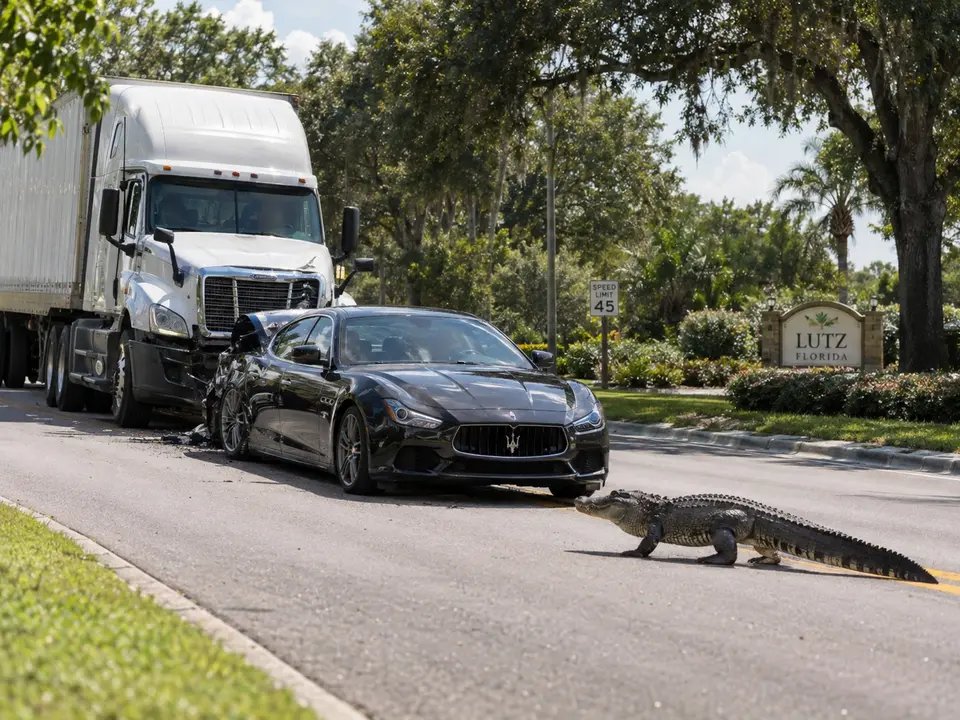
Florida traffic law requires every driver to maintain a reasonable and prudent distance behind the vehicle ahead. When a rear-end collision occurs, the natural inference is that the trailing driver followed too closely, drove inattentively, or failed to brake in time. That inference carries weight in claim evaluations and liability determinations. Insurance adjusters begin with it. Crash reports often reflect it. Settlement offers assume it.
But presumption is not proof. The trailing driver who rear-ends another vehicle is not automatically negligent. Florida law recognizes that liability depends on the facts of each collision, not on position alone. When evidence shows that the lead vehicle created the hazard, that a mechanical failure eliminated the trailing driver’s ability to stop, or that a third party caused the chain of events, the presumption can be rebutted. The trailing driver may then pursue recovery rather than defend fault.
When the Lead Vehicle Causes the Collision
A lead vehicle that stops abruptly in moving traffic without legal cause, brake lights malfunctioning or absent, may create liability. The driver who halts in a live lane to answer a phone call, who reverses on a highway after missing an exit, or who brakes hard to make an illegal turn may bear fault for the collision that follows. The rear-end impact does not immunize the lead driver from responsibility for sudden, unpredictable conduct.
Liability may also shift when the lead vehicle’s equipment fails. Brake lights that do not illuminate deny the trailing driver the warning needed to stop safely. Taillights obscured by grime, coverings, or aftermarket modifications reduce visibility and reaction time. If the lead vehicle’s brake light failure was a substantial cause of the collision, the trailing driver may not be at fault for failing to perceive an absent signal.
Consider a hypothetical: A driver exits a parking lot and stops in the rightmost lane of a four-lane road to check a phone. No hazard exists ahead. No turn signal activates. Traffic behind has no reason to anticipate a stop. The trailing vehicle strikes the stopped car. In that scenario, fault may not rest with the trailing driver who reasonably expected the lead vehicle to continue moving with the flow of traffic. The lead driver set the collision in motion by stopping without cause in a live lane.
Mechanical Failure as a Defense to Rear-End Fault
Brake failure, steering loss, tire blowouts, and throttle defects can eliminate the trailing driver’s ability to avoid a collision. When a mechanical defect occurs suddenly and without prior warning, the trailing driver may not be negligent. Florida negligence law does not impose liability when a driver exercises reasonable care but loses control because of an unforeseeable equipment failure.
The defense requires proof. Maintenance records, inspection reports, and expert testimony establish whether the failure was sudden or the result of deferred maintenance. A brake system that fails despite regular service supports the defense. A brake system that fails after months of ignored warning lights does not. The distinction determines whether the trailing driver is a victim of mechanical failure or the author of it.
Product liability claims may arise when the mechanical failure results from a manufacturing defect, design flaw, or inadequate warning. The trailing driver injured by defective brakes may have claims against the component manufacturer, the vehicle manufacturer, or a repair facility, in addition to any available insurance coverage. Recovery hinges on identifying the true cause of the collision and every responsible party.
Phantom Vehicles and Chain-Reaction Collisions
A phantom vehicle, one that causes a collision but does not remain at the scene, can shift fault away from the trailing driver. When a third vehicle cuts in front of the lead car, forcing a sudden stop, or strikes the lead vehicle and flees, the trailing driver who cannot stop in time may not be at fault. The phantom vehicle caused the chain reaction.
Proving phantom vehicle involvement requires evidence. Witness statements, dashcam footage, and traffic camera recordings document the third vehicle’s conduct. Without corroboration, the claim becomes difficult to sustain. Personal injury claims involving phantom vehicles often depend on uninsured motorist coverage, which in Florida may provide compensation when the at-fault driver cannot be identified or located.
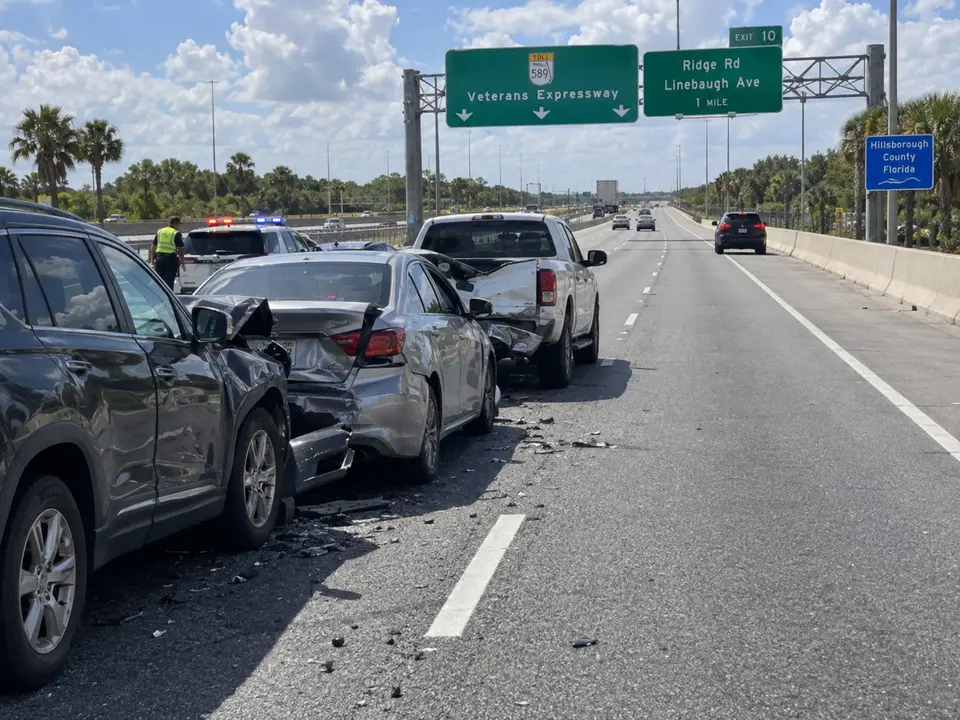
Chain-reaction collisions involving multiple vehicles complicate fault allocation. When the trailing driver is struck from behind and pushed into the lead vehicle, liability may rest entirely with the driver at the rear of the chain. Under Florida’s modified comparative negligence statute, a claimant who is found more than fifty percent at fault for their own harm is barred from recovering damages; below that threshold, damages are reduced in proportion to the claimant’s share of fault. Fault percentage directly affects settlement value, and early fault determinations often undervalue the trailing driver’s claim.
Roadway Hazards and Sudden Emergencies
Debris in the roadway, animals darting into traffic, and objects falling from other vehicles create sudden emergencies. When the lead vehicle swerves or stops abruptly to avoid a hazard that the trailing driver cannot see, the trailing driver may not be at fault for the resulting collision. The sudden emergency doctrine recognizes that a driver confronted with an unexpected peril is judged by what a reasonable person would do under the same emergency conditions, not by hindsight.
The doctrine applies only to true emergencies. A driver who speeds, follows too closely, or drives inattentively before encountering the hazard generally may not invoke it. The emergency must be sudden, unforeseeable, and not caused by the driver’s own negligence. Evidence of road conditions, weather, visibility, and the nature of the hazard determines whether the doctrine applies.
- Large debris in the roadway obscured by the lead vehicle until the last moment
- A pedestrian or animal entering the roadway without warning
- Another vehicle’s sudden lane change forcing an emergency stop
- Road surface defects such as potholes or collapsed pavement causing loss of control
When the roadway hazard results from inadequate maintenance or design, liability may extend to the governmental entity or private party responsible for the road. Dangerous condition claims require proof of notice, actual or constructive, that the hazard existed and that the responsible party failed to remedy it. Sovereign immunity, damage caps, and pre-suit notice requirements add procedural complexity and shorter deadlines to claims against governmental entities.
Rear-end collisions demand careful investigation before fault is assigned. Physical evidence, witness testimony, vehicle maintenance records, and crash reports may reveal liability that the collision’s appearance conceals. The trailing driver who accepts fault prematurely may abandon a valid claim and assume responsibility for losses another party caused. Fault allocation shapes every element of the claim, from coverage availability to settlement value, and early determinations often persist through negotiation and litigation.
Closing Remarks
If brake lights failed to illuminate before impact, if a third vehicle forced the lead car to stop suddenly, or if mechanical failure removed the ability to stop safely, fault may not rest where the rear-end collision suggests. Chris Debari has stood with drivers who were blamed first and heard later. CDB Injury Law investigates every rear-end collision to determine true liability, protect your rights, and restore your footing. You do not have to face this alone. Let us talk about your recovery.
Frequently Asked Questions
Can the trailing driver ever win a rear-end collision claim in Florida?
Yes. When evidence shows that the lead vehicle stopped without cause, that mechanical failure prevented the trailing driver from stopping, or that a third party caused the collision, the trailing driver may recover. The presumption of trailing driver fault is not absolute and can be rebutted when the facts support an alternative cause. Dashcam footage, witness statements, and expert analysis of vehicle systems provide the proof needed to overcome the presumption and establish liability.
What evidence is needed to prove the lead vehicle caused the rear-end collision?
Evidence includes witness testimony describing the lead vehicle’s sudden stop, traffic camera or dashcam footage showing the lead driver’s conduct, crash reports noting the absence of brake lights or unusual stopping behavior, and expert testimony on brake light functionality. Physical evidence such as road marks, vehicle damage patterns, and the location of the collision relative to intersections or hazards also supports the claim. Early evidence preservation is critical, as roadway evidence fades and witness memory dims.
Does uninsured motorist coverage apply when a phantom vehicle causes the rear-end collision?
Uninsured motorist coverage may apply when a phantom vehicle causes the collision and leaves the scene, provided the insured driver can corroborate the phantom vehicle’s involvement. Florida insurers and policy language generally require independent evidence beyond the driver’s own statement, witness accounts, physical evidence, or video footage, before paying such a claim. Without corroboration, the claim may be denied, leaving the trailing driver to pursue other sources of recovery. Policy terms and deadlines vary, so an early review of your own coverage matters.
How does comparative negligence affect rear-end collision claims when both drivers share fault?
Under Florida Statute § 768.81, a claimant found more than fifty percent at fault for their own harm may not recover damages atall. When the trailing driver bears partial fault, perhaps for following slightly too closely, but the lead vehicle also contributed through sudden stopping or brake light failure, damages are reduced by the trailing driver’s percentage of fault. A driver found thirty percent at fault recovers seventy percent of total damages. Fault allocation drives settlement value and determines whether recovery is possible, making early investigation and evidence preservation essential.
What happens if the trailing driver’s brakes failed due to a manufacturing defect?
If a manufacturing defect caused the brake failure, the trailing driver may pursue a product liability claim against the brake manufacturer, the vehicle manufacturer, or the repair facility that installed or serviced the brakes. Proving a defect requires expert testimony, vehicle inspection, and component testing. Recovery may come from the product liability claim and from any applicable insurance coverage. Maintenance records showing proper care and sudden failure support the claim and distinguish the driver from one who deferred necessary repairs.
References
- Florida Statute § 768.81 ((2023). Comparative fault).
- Fla. Stat. § 627.727 ((2023). Motor vehicle insurance; uninsured and underinsured vehicle coverage).
- Fla. Stat. § 316.0895 ((2023). Following too closely).
- Fla. Stat. § 768.28 ((2023). Waiver of sovereign immunity in tort actions).