


In Florida, the speedy trial clock generally begins when a person is taken into custody for the conduct at issue, usually by arrest or service of a notice to appear. Formal charges, defense continuances, exceptional circumstances, and the required “notice of expiration” process all affect how the deadline is enforced, but the State usually cannot avoid the clock simply by delaying the filing of an information or indictment.
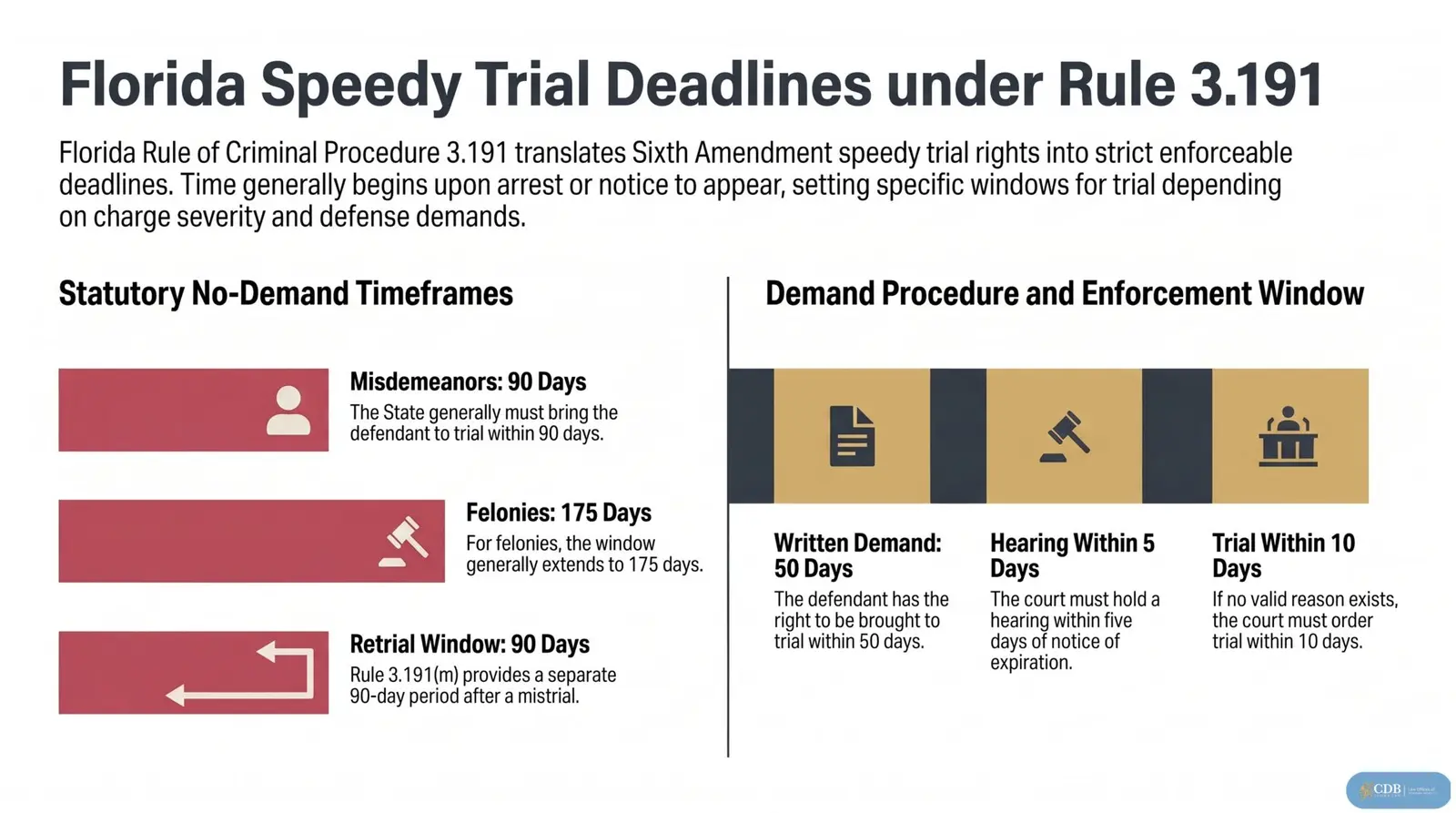
The Sixth Amendment promises a speedy trial. Florida law translates that promise into enforceable deadlines. But enforcing those deadlines requires more than counting calendar days. The defense must identify when the person was taken into custody, what charge level controls the time period, whether any delay is attributable to the defense, and whether the proper notice procedure has been followed after time expires. Missing one step can leave a defendant exposed to prolonged uncertainty, eroding memories, mounting stress, and weakened defenses. Recognizing what actually starts the clock, and what keeps it running, is not academic. It is tactical.

The Statutory Framework: Florida Rule of Criminal Procedure 3.191
Florida Rule of Criminal Procedure 3.191 governs Florida’s speedy trial deadlines. For misdemeanors, the State generally must bring the defendant to trial within 90 days. For felonies, the window generally extends to 175 days. These are not aspirational timelines. They are enforceable deadlines tied to the right to a speedy trial under both the Sixth Amendment and Article I, Section 16 of the Florida Constitution.
The starting point is precise: the time period begins when the defendant is “taken into custody” for the conduct or criminal episode that gives rise to the charge. Under Rule 3.191, that usually means the date of arrest or the date the defendant is served with a notice to appear in lieu of physical arrest. Formal charges matter because they define the prosecution and the applicable charge level, but they do not ordinarily postpone the start of the no-demand speedy trial period when the defendant has already been arrested for the same conduct.
When Arrest Starts the Clock and Why Charges Still Matter
Arrest sets many processes in motion: booking, bond hearings, discovery exchanges, and charging review. For speedy trial purposes, it also usually starts the no-demand clock. Consider a hypothetical: an individual is arrested on a Friday evening for battery, and the State Attorney’s office does not file an information until the following Tuesday. If the information is based on the same conduct that led to the arrest, the speedy trial period generally begins on Friday, not Tuesday. The State does not receive extra speedy trial time simply because formal charges were filed later.
The reverse situation is different. If an information is filed first, perhaps after an investigation that did not produce an immediate arrest, the speedy trial clock generally does not begin until the defendant is arrested or served with a notice to appear. Defense counsel tracking the timeline must identify the first qualifying custody event tied to the charged conduct, then evaluate whether later charging decisions, amended charges, or related counts change the analysis.
What Pauses or Extends the Clock
The speedy trial clock does not always run uninterrupted. Certain events may exclude time, extend the deadline, or waive the original no-demand speedy trial period. Delays attributable to the defendant, such as defense continuances, unavailability of the defendant, or competency proceedings, can prevent the defendant from obtaining discharge based on that period of delay. A continuance requested by the defense is especially important because it may waive the original speedy trial period rather than merely pause it for a few days.
Exceptional circumstances declared by the court can also extend the period. These may include unusual case complexity, a necessary witness who becomes unavailable despite due diligence, or joinder with a codefendant whose case legitimately requires more time. The State bears the burden of establishing that the delay was necessary and not the product of neglect or tactical advantage. A generalized backlog, crowded docket, or lack of diligent preparation does not qualify. The justification must be specific and documented.
Periods that may be excluded from the speedy trial calculation or otherwise prevent discharge include:
- Time during which the defendant is incompetent to stand trial
- Delay caused by defense motions, defense continuances, or defense-requested proceedings
- Reasonable delay necessary to accommodate codefendants
- Time required for pretrial proceedings that actually delay trial, including hearings on substantive motions
- Periods during which the defendant is unavailable, absent, or evading service
The rule does not forgive vague references to scheduling conflicts or general references to ongoing negotiations. Each excluded period should correspond to a specific event documented in the court file. If the case involves criminal defense representation in Tampa, counsel will scrutinize the docket for any gap between the stated reason for delay and the actual calendar entry. Unexplained gaps may count against the State.
The Effect of a Formal Speedy Trial Demand
A defendant may file a demand for speedy trial under Florida Rule 3.191(b). Once properly filed and served, the demand compresses the timeline. The defendant has the right to be brought to trial within 50 days of the demand. The court must hold a calendar call within five days, and trial is generally set for a date not less than five days and not more than 45 days from that calendar call.
The demand must be in writing, filed with the court, and served on the prosecutor. Oral requests do not satisfy the rule. Just as important, a demand represents that the defense is ready for trial. Discovery must be complete, witnesses identified, and plea negotiations concluded or abandoned. A demand filed prematurely can backfire if the defense is unprepared when the compressed deadline arrives.
If the State does not bring the defendant to trial within the applicable speedy trial period, dismissal is not automatic. The defense must file a “Notice of Expiration of Speedy Trial Time.” The court must then hold a hearing within five days unless the notice is facially insufficient. If the court finds no valid reason for the delay, it must order the trial to begin within 10 days. If trial does not commence within that final recapture window through no fault of the defense, the defendant is entitled to discharge, and the charges are dismissed with prejudice.
Retrial After Mistrial, New Trial Order, or Appeal

Speedy trial protections do not evaporate after a mistrial, hung jury, order granting a new trial, or appellate reversal. Florida Rule 3.191(m) provides a separate 90-day period when a person must be tried again after a mistrial, an order granting a new trial, or a mandate or order from an appellate court requiring a new trial. Delays attributable to the defendant, such as defense motions for continuance or unavailability, can affect that period just as they affect the original deadline. But the State’s obligation remains: bring the case to trial within the new window or justify the delay under the rule.
Closing Remarks
If formal charges were filed long after arrest, if a speedy trial demand was filed and the State missed the deadline, or if unexplained delays have stretched a case beyond the statutory window, the constitutional clock may matter to the outcome. CDB Injury Law defends individuals facing criminal charges in Florida and holds the State to the deadlines the law requires. You do not have to face this alone. Contact us today to review your case timeline and protect your right to a speedy trial.
Frequently Asked Questions
Can the defense extend the speedy trial deadline?
Yes. Defense motions, continuances, unavailability, and other delays attributable to the defendant can exclude time, extend the deadline, or waive the original no-demand speedy trial period. Strategic decisions, such as requesting additional time for discovery or filing substantive pretrial motions, should be evaluated carefully because they may affect the ability to seek discharge later.